Cheaper Freight Shipping

Shipping Top-Heavy Industrial Freight Without Rejection
Learn how to pack and secure high-center-of-gravity machinery safely using advanced blocking, bracing, and X-strap techniques to pass carrier inspections.
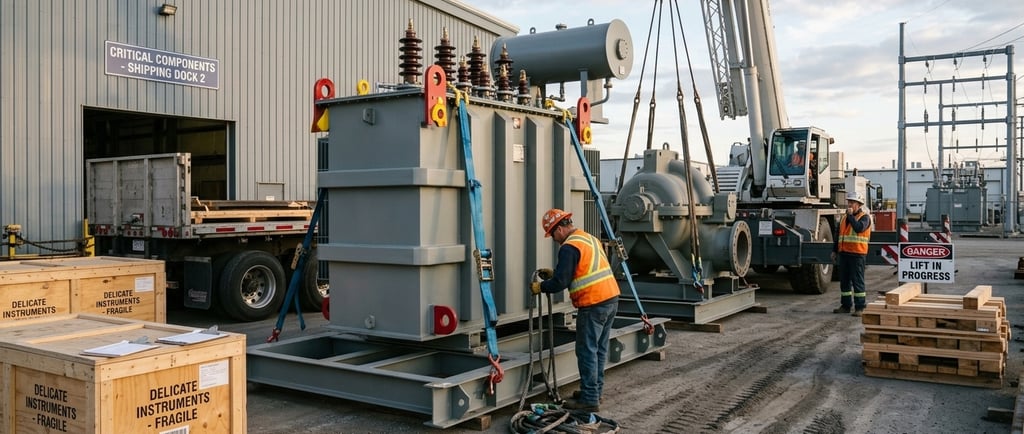
How to Prep Top-Heavy Industrial Freight (And Avoid Carrier Rejections)
Shipping heavy machinery like drill presses, industrial mixers, vertical bandsaws, or electrical enclosures is a logistical tightrope walk. They have a massive footprint, cost thousands of dollars, and—most frustratingly—their center of gravity sits way too high.
To a freight carrier, a top-heavy pallet looks like a disaster waiting to happen. If a driver thinks your load is going to tip over the first time they hit the brakes, they will refuse to sign the Bill of Lading (BOL) and leave your freight sitting on the dock.
Worse yet, if an improperly secured top-heavy load tips over inside a trailer, it can destroy adjacent cargo, damage the truck, or injure dockworkers. When that happens, your business is on the hook for structural damages and massive liability claims.
To protect your equipment and ensure your shipments are accepted every single time, use this step-by-step guide to prepping top-heavy industrial freight.
1. Upgrade to an Oversized, Heavy-Duty Pallet
Standard, lightweight pallets made of thin pine slats are not meant for top-heavy loads. The narrow base allows the cargo to sway, and the wood can easily split under concentrated downward force.
Build a Wider Base: Choose a pallet or skid that extends at least several inches past the physical footprint of the machine. A wider base mechanically lowers the risk of tipping by expanding the foundation.
Use Heavy-Duty Hardwood: Opt for custom-built skids or heavy-duty, 4-way hardwood pallets (like GMA block pallets). The wood must be thick enough to anchor heavy metal screws and lag bolts without splitting.
2. Block and Brace Directly into the Wood
You cannot rely on friction, strap tension, or gravity to hold a top-heavy machine in place. The base of the machine must be physically locked to the pallet so it behaves as a single, immovable unit.
Use Wood Chocks: Cut heavy 2x4 or 4x4 wooden blocks and place them tightly against all four sides of the machine's base.
Lag Bolt the Frame: If the machinery has pre-drilled mounting holes in its feet (designed for anchoring it to a factory floor), use them. Run heavy lag bolts directly through those mounting holes straight into the thickest runners of the pallet.
Screw the Bracing Down: Use heavy-duty construction screws to secure your wooden chocks directly into the pallet deck boards. This prevents the base from sliding or shifting horizontally during transit.
3. Apply the "X-Strap" Banding Technique
Standard vertical strapping merely pushes down on the asset. For top-heavy items, you need a configuration that counteracts side-to-side and front-to-back swaying forces.
Choose the Right Material: Skip the lightweight polyester strapping. Use heavy-duty polypropylene or high-tensile steel banding.
Anchor the Top, Pull to the Corners: Run your strapping from a high, secure structural point on the machine down diagonally to the opposite bottom corners of the pallet, forming an "X" pattern.
Protect the Machine: Use heavy-duty plastic or metal edge protectors where the straps touch the machine. This prevents the metal banding from scratching the equipment or cutting through delicate wiring harnesses and hydraulic lines.
4. Counteract Top-Heaviness with Counterweights (If Necessary)
If the item is so top-heavy that it remains unstable even when bolted down, you must manually shift the center of gravity downward.
Add Low-Level Mass: Secure heavily weighted sandbags, steel plates, or dense metal components to the very bottom of the pallet structure.
Ensure Independent Anchoring: Make sure these counterweights are bolted down just as securely as the machine itself so they don't turn into loose projectiles inside the truck.
5. Label Excessively for the Carrier
Drivers and dockworkers handle hundreds of pallets a day. They will treat your shipment like a standard box unless you explicitly tell them otherwise.
Affix "Top-Heavy" Labels: Place bright, highly visible "Danger: Top-Heavy" or "High Center of Gravity" labels on all four sides of the shipment at eye level.
Apply "Do Not Stack" Cones: Tape a crushed-warning cone (often called a "no-stack cone") directly to the top of the pallet. If a carrier stacks another pallet on top of a top-heavy machine, a catastrophic tip-over is almost guaranteed.
Do you have an irregular, top-heavy piece of machinery that needs to move without a scratch?
We will pair you with a specialized carrier equipped to handle high-risk industrial freight safely.
Help
Get quick answers to your shipping questions
Contact
© 2026. All rights reserved.