Cheaper Freight Shipping

How to Avoid Freight Reclassification Fees and Lower Shipping Costs
Learn how to avoid freight reclassification fees with accurate dimensions, proper freight class, and better LTL shipping practices.
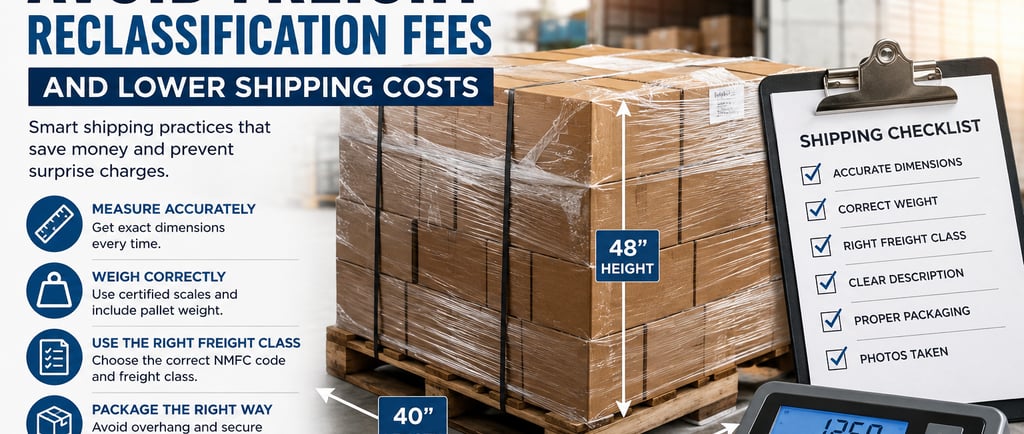
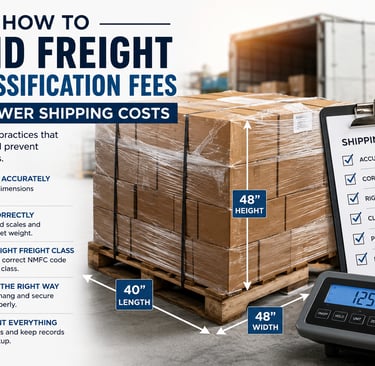
Freight reclassification fees are one of the most frustrating surprise expenses in shipping. One small mistake in dimensions, weight, or freight class can suddenly turn a reasonable freight bill into a much larger invoice days or even weeks later.
For small businesses, eCommerce sellers, manufacturers, and warehouse operators, these unexpected charges can quickly add up.
The good news is that most freight reclassification fees are preventable.
In this guide, we’ll break down what freight reclassification means, why it happens, and the best ways to avoid costly shipping adjustments.
What Is Freight Reclassification?
Freight reclassification happens when a carrier determines that your shipment information does not match what was listed on the Bill of Lading (BOL).
Carriers may inspect:
Weight
Dimensions
Packaging
Commodity description
Freight class
If they find discrepancies, they may:
Change the freight class
Increase shipping charges
Add inspection fees
Apply handling surcharges
Most freight classification standards come from the National Motor Freight Traffic Association and the National Motor Freight Classification system.
Why Freight Reclassification Happens
The most common reasons include:
Incorrect pallet dimensions
Estimated weights
Wrong freight class
Vague commodity descriptions
Freight overhang
Improper packaging
Today’s carriers use advanced scanning systems and automated freight measurement tools, making it much easier for them to identify discrepancies.
Even being off by a few inches or pounds can trigger a billing adjustment.
How to Avoid Freight Reclassification Fees
1. Use the Correct Freight Class
Freight class is one of the biggest pricing factors in LTL shipping.
Lower freight classes are generally cheaper because they are:
Dense
Easy to handle
Less fragile
More stackable
Using the wrong class is one of the fastest ways to get reclassified.
Common Mistake
Listing:
“Parts”
instead of:“Steel automotive parts”
Detailed commodity descriptions matter.
2. Measure Pallets Accurately
Always measure:
Length
Width
Height
Total pallet height including the pallet itself
Measure at the:
Widest point
Tallest point
Furthest overhang
Important Tip
Carriers now use laser measurement systems that can detect even small dimensional errors.
Never estimate dimensions.
3. Weigh Shipments Properly
Use:
Certified scales
Floor scales
Warehouse pallet scales
Include:
Packaging
Pallet weight
Crates and skids
Estimated weights are one of the most common causes of freight billing corrections.
4. Avoid Pallet Overhang
Boxes hanging off the pallet create multiple problems:
Larger measured dimensions
Handling difficulties
Increased damage risk
Additional handling fees
Keeping freight neatly within pallet boundaries helps reduce both costs and inspections.
5. Use Density-Based Freight Calculations
Freight density plays a major role in classification pricing.
The formula carriers often use is:
Density=Weight (lbs) divided by Cubic Feet {Density}
In general:
Higher density = lower freight class
Lower density = higher shipping cost
Dense freight usually ships more cheaply than lightweight bulky items.
6. Write Clear Commodity Descriptions
Avoid vague wording like:
Merchandise
Equipment
Parts
Instead, use specific descriptions such as:
Commercial HVAC components
Steel machine parts
Plastic storage containers
The clearer your BOL description, the less likely the carrier will flag the shipment for inspection.
7. Take Photos Before Pickup
Before the carrier arrives, photograph:
Pallet dimensions
Packaging condition
Labels
Scale readings if possible
Photos can help dispute incorrect reclassification charges later.
Best Practice
Include a tape measure in the photo whenever possible
8. Standardize Packaging Procedures
Businesses that ship frequently should create consistent shipping processes.
This includes:
Standard pallet sizes
Packaging guidelines
Weight verification procedures
BOL accuracy checks
Consistency reduces mistakes and improves shipping efficiency.
9. Work With an Experienced Freight Broker
A good freight broker can:
Verify freight class
Check NMFC codes
Catch shipping errors early
Help dispute carrier adjustments
Many small businesses save significant money simply by having an experienced broker review shipments before pickup.
Freight reclassification fees are frustrating because they often appear after the shipment has already been delivered. But in most cases, they can be avoided through better measurement, accurate documentation, and proper packaging procedures.
The businesses that minimize freight surprises usually focus on:
Accurate dimensions
Correct freight class
Detailed BOL descriptions
Standardized shipping procedures
A small investment in shipping accuracy today can save thousands in unexpected freight charges over time.
If your company ships regularly, improving freight documentation may be one of the easiest ways to reduce logistics costs and improve profitability.
My How to Avoid Freight Reclassification Fees and Reduce Shipping Costs
Help
Get quick answers to your shipping questions
Contact
© 2026. All rights reserved.